📝The Robot Family Tree: Understanding the Different Types of Robots

🤖 The Robot Family Tree: Understanding the Different Types of Robots
When someone says the word "robot," what pops into your head? For some, it’s a shiny humanoid from a sci-fi movie. For others, it’s a massive mechanical arm welding a car chassis.
The truth is, robotics is an incredibly diverse field. Engineers classify robots into specific categories based on their mechanical structure and kinematic configuration (how their joints and links are arranged to allow movement) [web:28, web:31].
Let's break down the most common types of robots you'll encounter in the industry and exactly what makes them unique.
🏗️ 1. Cartesian (Gantry) Robots
 (Note: Visual representation of a Cartesian mechanism, commonly seen in 3D printers and CNC machines).
Cartesian robots are the most straightforward type of robot to understand. Instead of rotating joints, they use prismatic joints (linear sliders) to move in straight lines [web:28, web:31]. They operate strictly on the X, Y, and Z axes, creating a box-shaped (cubic) working area [web:30].
Because they are supported on multiple ends and only move in straight lines, they are incredibly rigid, highly accurate, and can be scaled up to massive sizes [web:30, web:31].
🛠️ Best For:
- 3D Printing & CNC Machining: Where exact, rigid linear movement is required [web:30, web:31].
- Heavy Material Handling: Moving heavy loads across a factory floor (often called Gantry robots) [web:31].
- Pick-and-Place: Moving items quickly from one precise coordinate to another [web:30, web:31].
💪 2. Articulated (Jointed-Arm) Robots
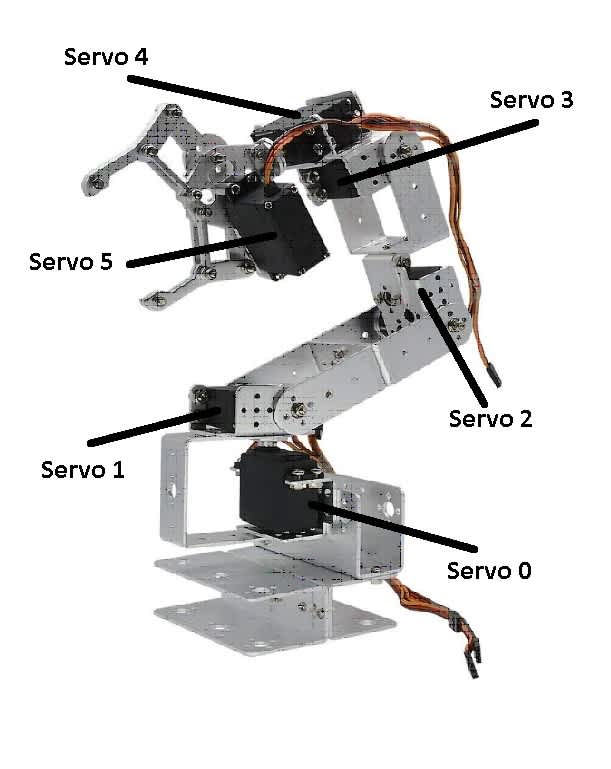
When you picture a robot in a factory, you are almost certainly picturing an Articulated Robot. These robots are designed to mimic the human arm, featuring a series of rotary joints (revolute joints) driven by servo motors [web:30].
Most industrial articulated robots have 4 to 6 joints (axes), though advanced models can have up to 10 [web:30]. This jointed design gives them maximum flexibility, allowing them to reach under, over, and around obstacles [web:30].
🛠️ Best For:
- Welding and Painting: Reaching difficult angles on a car chassis [web:30].
- Complex Assembly: Manipulating parts with human-like dexterity [web:30].
- Machine Tending: Loading and unloading CNC machines [web:30].
🔄 3. SCARA Robots
 (Note: Visual representation of a SCARA robot used in rapid assembly).
SCARA stands for Selective Compliance Assembly Robot Arm [web:30, web:31]. It is a highly specialized robot that is flexible in the X and Y axes, but completely rigid in the Z (vertical) axis [web:30, web:31].
Imagine keeping your shoulder and elbow at the same height while moving your hand left and right—that’s a SCARA. Because it only moves up and down on a rigid vertical pillar, it is incredibly fast and precise when doing flat, horizontal work [web:30].
🛠️ Best For:
- PCB Assembly: Rapidly placing electronic components onto circuit boards [web:30].
- High-Speed Pick-and-Place: Sorting items on a fast-moving conveyor belt [web:30].
- Screwdriving: The rigid Z-axis allows it to press down hard without the arm bending out of shape [web:30, web:31].
🕷️ 4. Delta (Parallel) Robots
 (Note: Visual representation of a Delta robot mounted above a conveyor).
Also known as "spider robots," Delta robots look like an upside-down tripod [web:30]. Instead of having one joint connected to the next in a single chain (like an articulated arm), Delta robots use three or more arms connected to a single central base [web:28, web:30].
The heavy motors are mounted stationary at the top frame, while incredibly lightweight arms reach down to a central tool [web:30]. Because the moving parts weigh almost nothing, Delta robots can move at blistering, superhuman speeds [web:30].
🛠️ Best For:
- Food Processing: Rapidly sorting and packaging chocolates, cookies, or pills [web:30].
- Ultra-Fast Sorting: Categorizing lightweight items on a conveyor line [web:30].
🆚 Quick Comparison Cheat Sheet
| Robot Type | Mechanical Design | Biggest Advantage | Biggest Disadvantage |
|---|---|---|---|
| Cartesian | Linear tracks (X, Y, Z) | High rigidity and precision [web:30, web:31] | Takes up a lot of space [web:30] |
| Articulated | Rotary joints (human arm) | Incredible flexibility [web:30] | Slower than SCARA/Delta, complex programming [web:30] |
| SCARA | Rigid vertically, flexible horizontally | Very fast on flat planes [web:30] | Limited to flat (planar) workloads [web:30] |
| Delta | Parallel arms from a top base | Blistering fast speeds [web:30] | Cannot handle heavy payloads [web:30] |
🧠 What About Mobile Robots?
The classifications above focus strictly on robot manipulators (arms). However, modern robotics also heavily features mobile platforms [web:29]:
- AGVs (Automated Guided Vehicles): Robots that follow fixed magnetic lines or tracks on a warehouse floor [web:29].
- AMRs (Autonomous Mobile Robots): Robots with onboard sensors (like LiDAR) that can navigate dynamically around humans and obstacles without tracks [web:29].
- Cobots (Collaborative Robots): Specially designed articulated arms with force sensors that allow them to work safely right next to humans without safety cages [web:29].
Whether you are building a simple linear rail system for a 3D printer or programming a 6-axis arm for your desktop, understanding these mechanical structures is the first step in mastering robot design.