🧰Your Child Lost Interest in the Robotics Kit? A Two-Weekend Restart Plan
Robotics kit in the cupboard? Find the stuck step, then follow a two-weekend plan to get your child building again without nagging.
In this article (11)
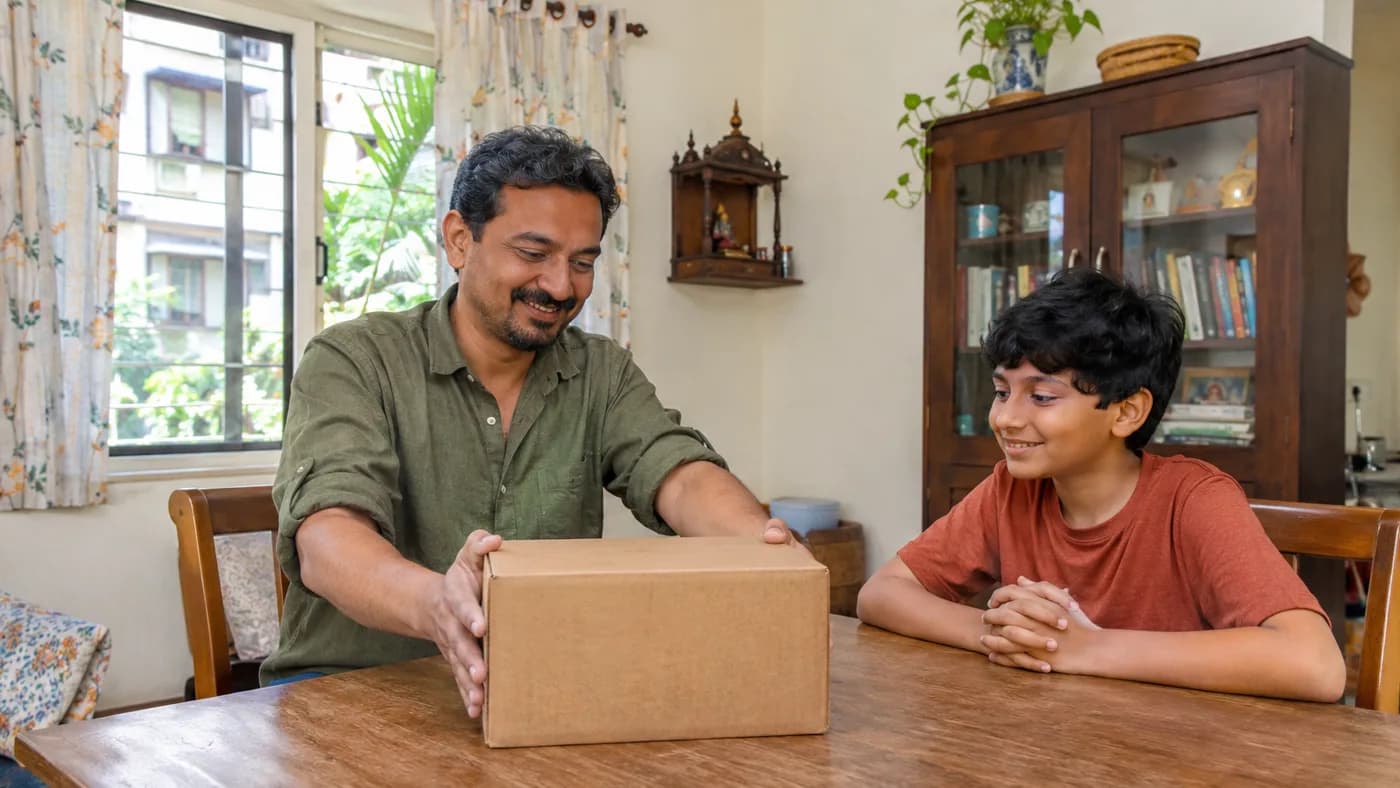
Do not start again from page one. Go back to the last step that worked, sit with your child for ten minutes, get one small result, and stop while it is still fun. Often it is one stuck step, not lost interest.
Find out why it stopped
Ask "what was the last thing you tried?" rather than "why did you stop?"
| What you hear | Likely reason | First thing to try |
|---|---|---|
| "It doesn't work" | Power, a loose wire or a wrong pin | The stuck-step checks below |
| "It's boring" | Too easy, or someone else's project | Let them decide what it should do |
| "It's too hard" | A skipped step, or too advanced | Return to the last working step |
| "I'll do it later" | No time or place | One fixed hour and an open box |
| Silence | Pressure | Take a week off, then ask them to teach you one part |
Before you open the box: batteries
An adult looks first, before a child touches anything. If a lithium cell is swollen, leaking, dented or hot, do not charge, press, puncture or use it. If it is hot, hissing or smoking, do not touch it. Move everyone out and call 112. Otherwise, if it is safe to move, keep it away from anything that burns and take it to a battery or e-waste collection point. Never put it in the bin. For swollen batteries and disposal, see the US EPA's advice.
Weekend 1: one win
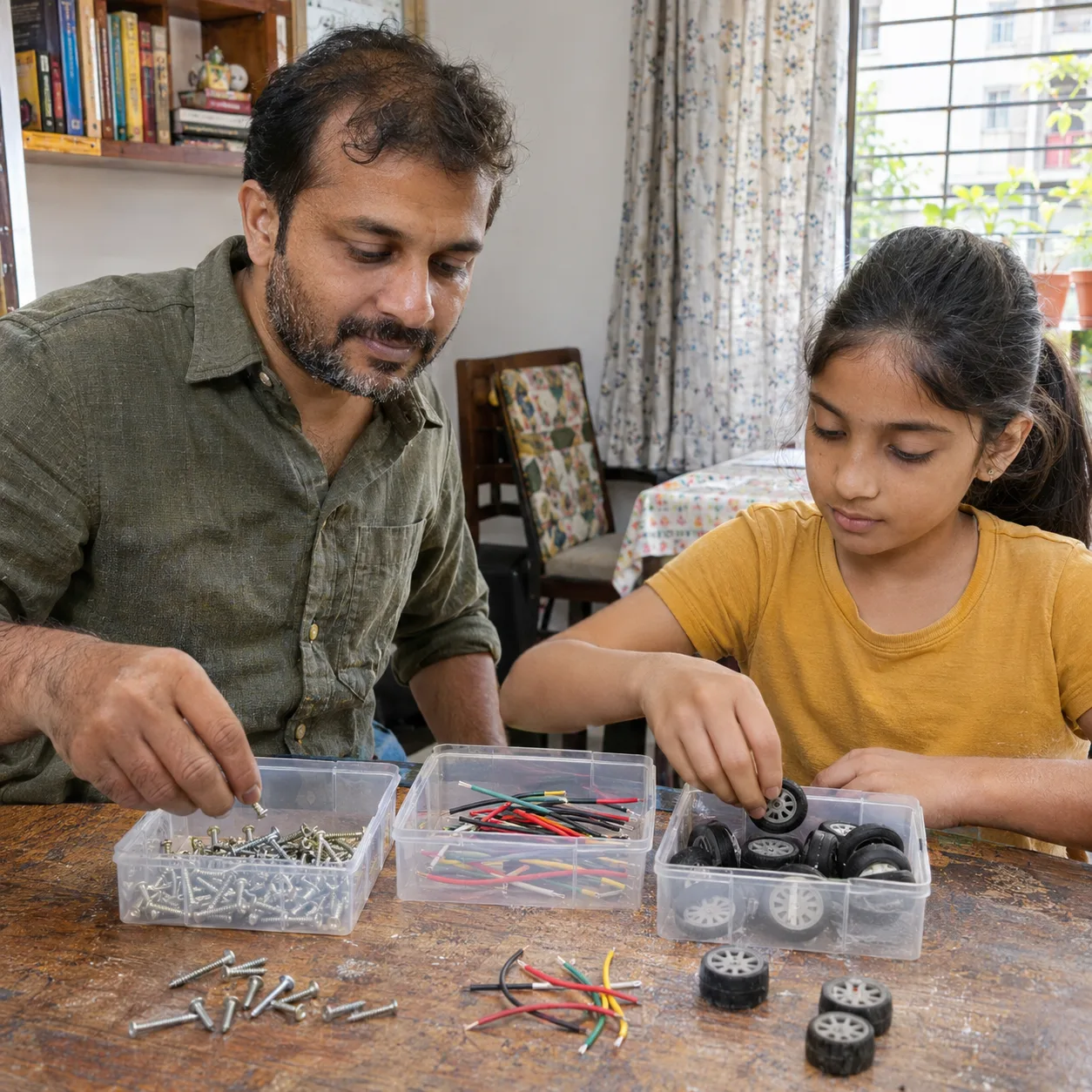
Saturday, 30 minutes. With batteries out, sort parts into small boxes together. No fixing today.
Sunday, 40 minutes. An adult puts the batteries back, matching plus and minus. Repeat the last step that worked. If nothing works, do the first test in the kit's own manual: one light or one motor. Film it and send it to a grandparent.
Weekend 2: make it theirs
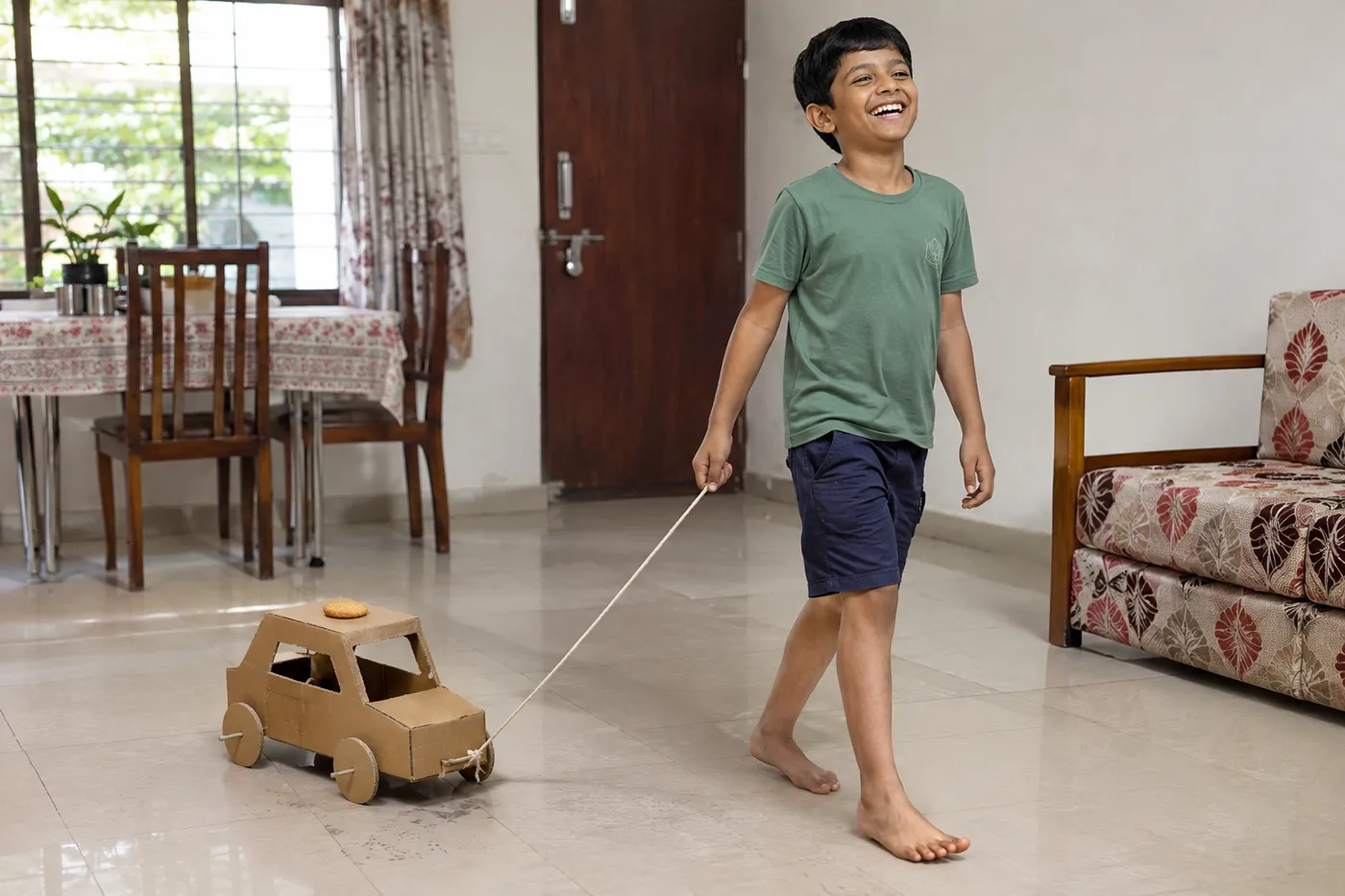
Ask for a silly idea: a robot that carries a biscuit, or a door alarm for an annoying cousin. Write it as three steps and try only the first.
The stuck-step checks
| Check | If not |
|---|---|
| Is it charged and switched on? | An adult charges it with the kit's own charger, on a hard surface, and stays nearby |
| Does the cable carry data? Some only charge | Try another cable |
| Do plus and minus match the diagram? | Switch off, then move one wire |
| Does the last working step still work? | Go back one more step |
| Did you change only one thing? | Undo, then change one |
Specific problems:
- Board not found: ESP32 port guide
- Arduino upload error: avrdude guide
- Restarts when the motor runs: Arduino reset guide
- "Brownout" message: ESP32 brownout guide
Still stuck with one of our kits? Ask in the lesson's discussion on learn.thinkingrobot.in (free sign-up), or email info@thinkingrobot.in.

What to say, and what not to
| Instead of | Try |
|---|---|
| "We paid for this" | "Show me the part you liked" |
| "Just follow the steps" | "Which step stopped making sense?" |
| "Let me do it" | "I'll hold it, you connect" |
When to let it go
If two weekends like this do not help, the kit may be the wrong one for now. Put it away, or pass it to a cousin or school club without old batteries. Trying something and moving on is fine.
A child who builds happily with friends but not alone may prefer a class. Our parents' guide covers how to choose one. If screens are the bigger pull, see screen time to build time.
Frequently asked questions
Should I finish it for my child?
Fix the one thing that blocks them, then hand it back.
How often should they work on it?
Try one relaxed hour a week.
Did we buy it too early?
Perhaps. Which kit suits my child explains what to check next time.
Thinking Robot Team
Thinking Robot is a team of engineers and educators in Pune who design electronics and robotics kits and run hands-on workshops for students and schools. Spotted a mistake or have a question? Get in touch.